


Description
Collector's Note – Why This Issue Matters
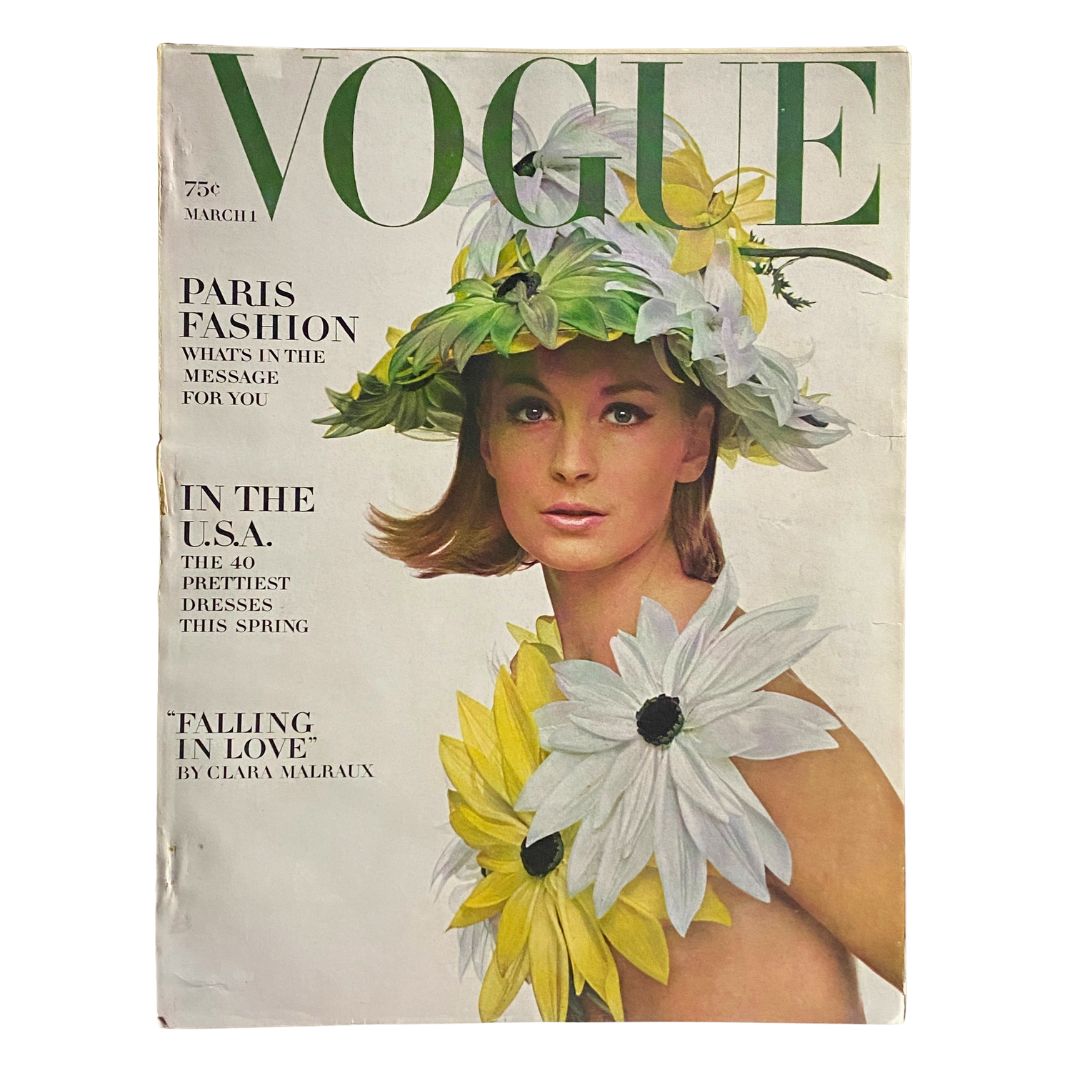
The March 1, 1964 issue of Vogue is a document of fashion and culture at a moment of genuine creative ferment. Bert Stern's cover photograph of Anne de Zogheb — a Lebanese-born socialite and model whose aristocratic bearing made her a recurring presence in Vogue's early 1960s pages — arrives less than two years after his legendary "Last Sitting" with Marilyn Monroe in June 1962, a session that had already begun to acquire its mythological status. By March 1964, Stern was at the absolute peak of his editorial influence, and his cover work for Vogue carried an authority that few photographers of the era could match. Anne de Zogheb herself represents a specific type that Vogue cultivated during this period: women who inhabited the boundary between socialite and model, whose appeal derived as much from social position as from conventional modeling credentials. For collectors building a deep archive of Vogue magazine issues from the 1960s, a Bert Stern cover from early 1964 is a meaningful attribution — not a routine fashion photograph but a document of one of the medium's most distinctive practitioners at full strength.
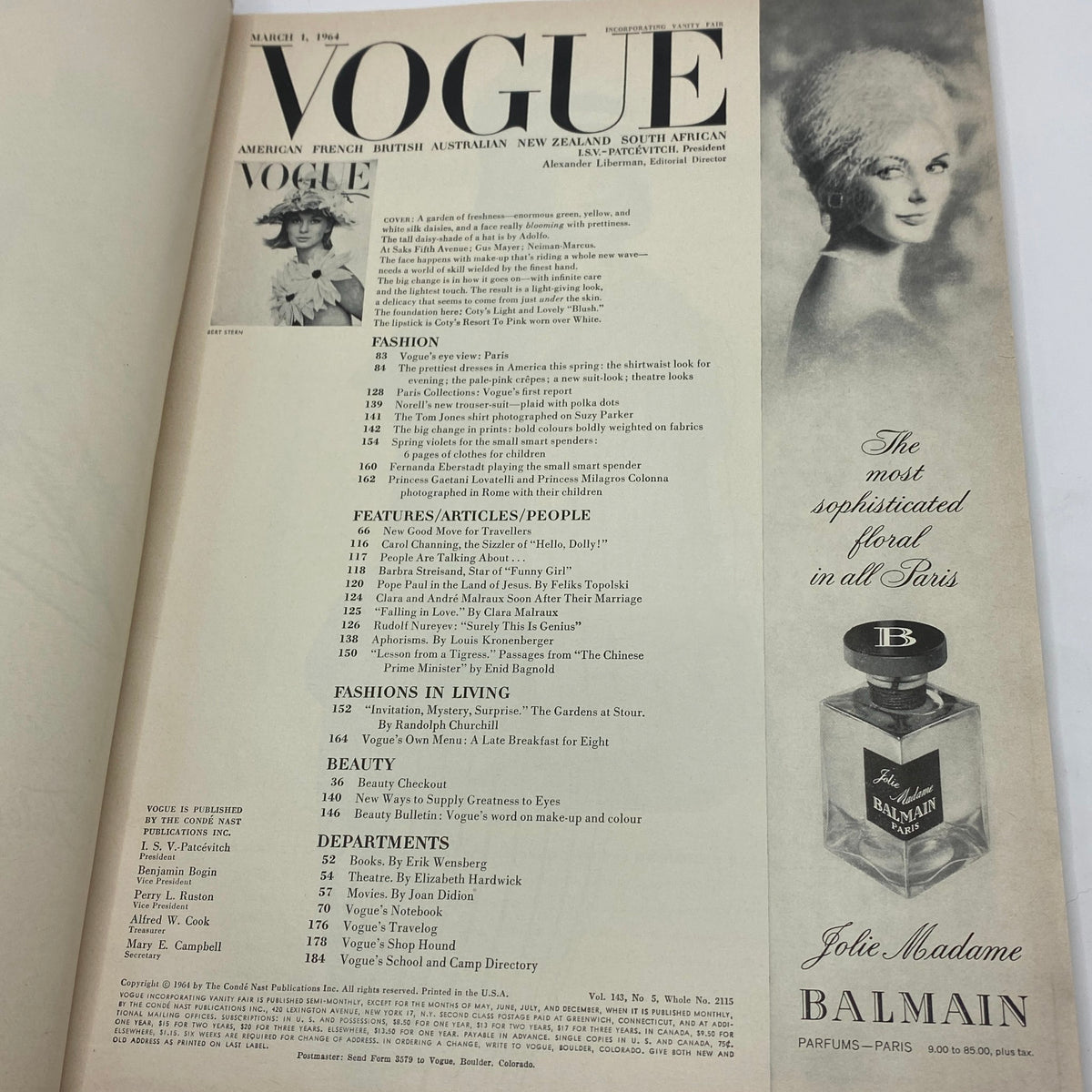
The interior content transforms this issue from a beautiful cover into a genuinely substantial cultural artifact. The confirmed table of contents reads like a Who's Who of early 1964 cultural life. Carol Channing is featured in connection with Hello, Dolly!, which had opened on Broadway on January 16, 1964 — just six weeks before this issue's publication date — to the kind of rapturous reception that would make it one of the defining musical theater events of the decade. Barbra Streisand appears in connection with Funny Girl, which was then in previews and would open in March 1964, launching one of the most celebrated Broadway careers of the twentieth century. Rudolf Nureyev, who had defected from the Soviet Union in 1961 and was by 1964 redefining ballet for Western audiences through his partnership with Margot Fonteyn, receives a profile headlined "Surely This Is Genius." The piece by Clara Malraux on falling in love, written shortly after her marriage to French Minister of Cultural Affairs André Malraux, adds a literary-political dimension characteristic of Vogue's editorial ambitions in the early 1960s.
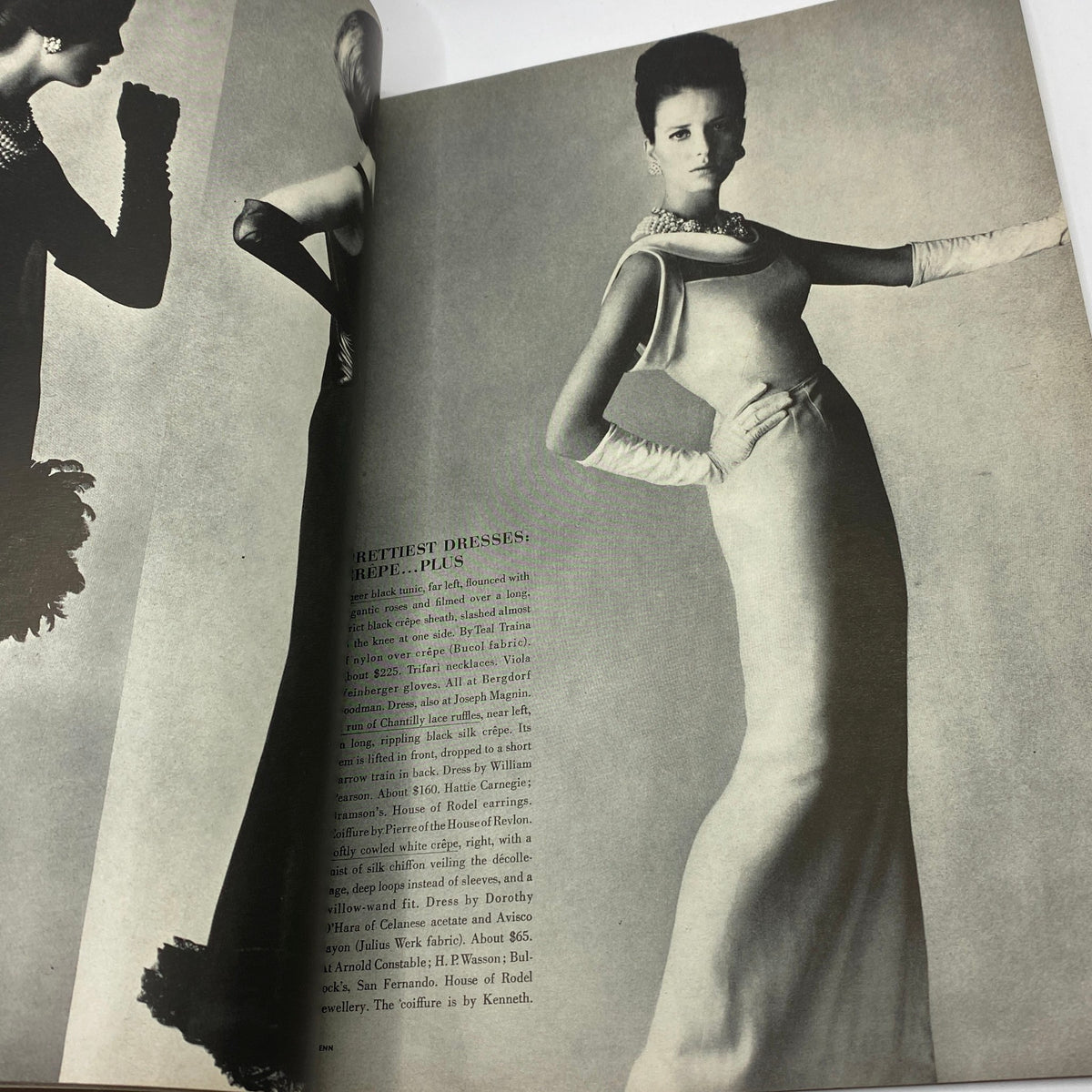
The fashion content is equally rich as a primary source. The Paris Collections first report and Vogue's eye view of Paris place this issue at the beginning of the spring 1964 fashion season — one of the last seasons before the mid-decade upheaval that would begin to dismantle the traditional couture calendar's authority. The feature on Suzy Parker wearing the Tom Jones shirt is a precise document of a specific fashion cultural moment: Parker was one of the most famous models of the 1950s and early 1960s, and the Tom Jones reference connects the issue to the 1963 film adaptation that had made Regency-influenced fashion briefly fashionable. Joan Didion's film criticism and Elizabeth Hardwick's theater coverage confirm that this issue's engagement with culture extended well beyond the runway — both were significant literary voices, and their presence in Vogue's pages reflects the editorial standard Diana Vreeland was establishing in her first year as editor-in-chief.
About the Publication
American Vogue in March 1964 was in the earliest months of Diana Vreeland's editorship, which had begun in January 1963 and would run until 1971. Vreeland's arrival had immediately energized the publication's visual and intellectual ambitions — she commissioned bolder photography, engaged writers from outside the fashion world, and insisted that Vogue treat its readers as culturally sophisticated adults rather than passive consumers of trend reporting. The March 1 issue, one of the twice-monthly publications of this era, reflects those priorities across every section: the Paris collections coverage sits alongside Broadway criticism, papal travel journalism, literary passages, and profiles of artists and politicians. The magazine's large format — confirmed in the listing at 10.5 by 13.5 inches — was integral to its identity, providing a canvas scaled to Vreeland's expansive visual vision and to Stern's large-format photographic sensibility.
Key Highlights Inside
- Cover photograph of Anne de Zogheb by Bert Stern, published at the height of Stern's editorial influence and within two years of his celebrated "Last Sitting" with Marilyn Monroe.
- Feature on Carol Channing and Hello, Dolly!, published just six weeks after the musical's January 16, 1964 Broadway opening — primary source documentation of one of the decade's defining theatrical events at its moment of first impact.
- Coverage of Barbra Streisand in connection with Funny Girl, then in previews ahead of its March 1964 Broadway opening — catching a career at its precise launch point.
- Rudolf Nureyev profile headlined "Surely This Is Genius," documenting the critical reception of the Soviet defector who had by 1964 become the most discussed dancer in the Western world.
- Paris Collections first report and Vogue's eye view of Paris — comprehensive spring 1964 couture season coverage from one of the last years of traditional haute couture's unchallenged authority.
- Film criticism by Joan Didion and theater coverage by Elizabeth Hardwick — two of American literature's significant voices contributing to Vogue's cultural pages under Vreeland's editorship.
Condition & Rarity
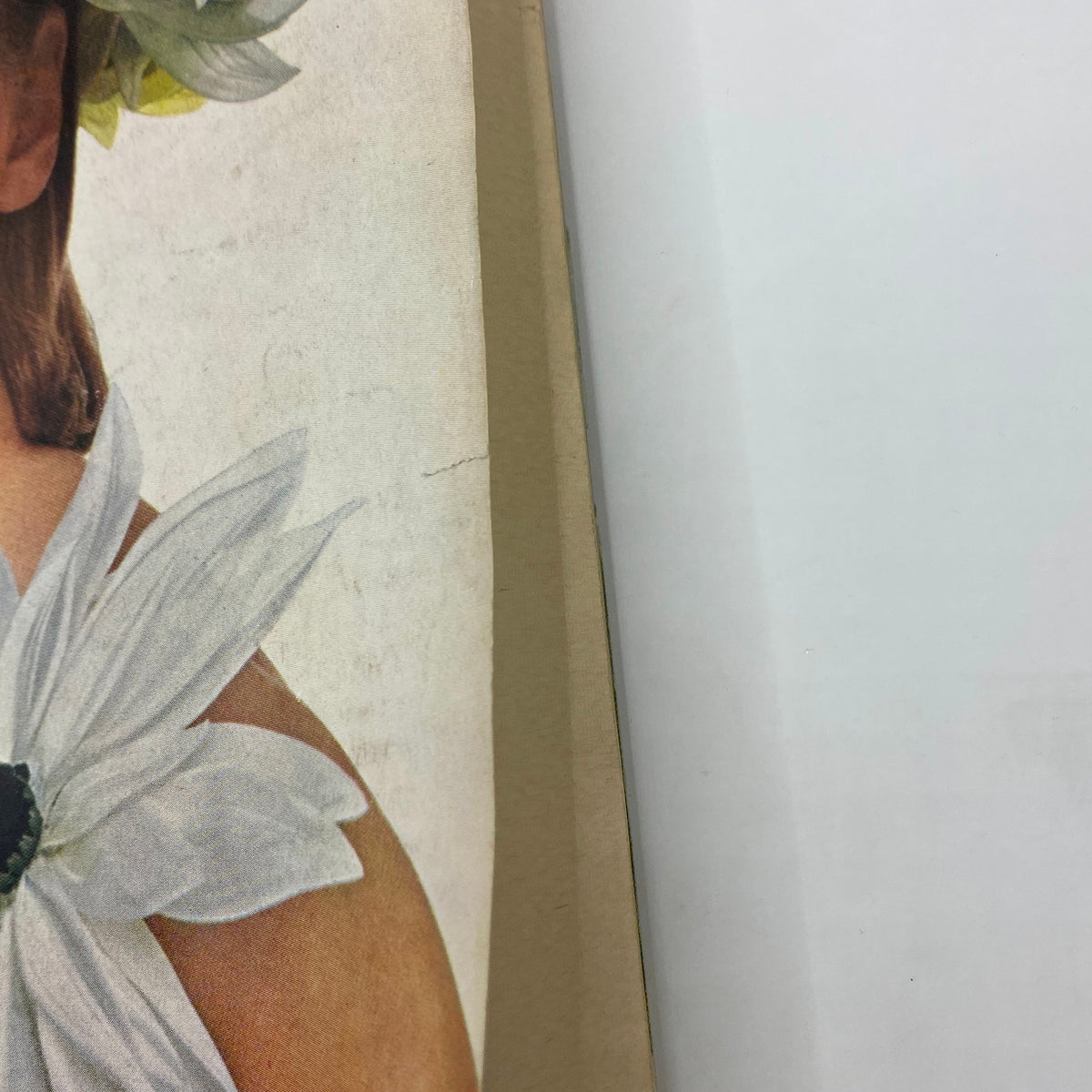
The absence of a mailing label on the front cover is the single most important condition attribute for this issue in collector terms. Subscriber copies of American Vogue from 1964 were delivered with address labels applied directly to the cover, and the absence of label damage or residue on a surviving copy is a strong indicator of newsstand rather than subscriber origin. Newsstand copies of twice-monthly Vogue from the early 1960s are considerably less common in the collector market than subscriber copies, and early Vreeland-era issues with Bert Stern cover photography represent a specific and sought-after category. Good condition with the implied minor age-consistent wear is appropriate for a sixty-year-old publication. The plastic protective covering indicates deliberate preservation storage. When evaluating any surviving copy of this issue, the critical condition factors are cover image brightness and surface integrity under Stern's photography, spine soundness given the issue's substantial page count, and the degree of toning in the interior coated stock pages, which respond poorly to light exposure over time.
Looking for More Issues Like This?
A label-free newsstand copy of a Bert Stern cover from the first year of Vreeland's editorship — with interior content this culturally dense — is among the more genuinely compelling finds in the early 1960s Vogue archive, and issues combining this level of fashion and cultural editorial substance don't surface in collectible condition frequently. If this one has already been claimed, the full archive of Vogue magazine issues spans the publication's entire run and is the best place to continue exploring the Vreeland years. The 1964 magazine collection offers broader context for this specific and culturally rich year across multiple publications and perspectives.